
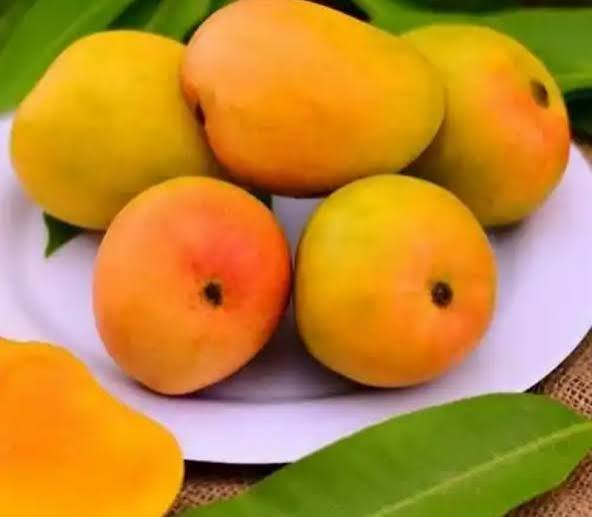
When it comes to fruits in India, there are ordinary varieties, and then there is the undisputed king—the Alphonso Mango. Locally known as Hapus, this legendary fruit is globally renowned for its rich, creamy, fiberless saffron flesh, its intoxicating aroma that can fill an entire room, and its perfect balance of sweetness and acidity.
From premium gourmet stores in London and New York to bustling local fruit markets in Mumbai and Delhi, the demand for authentic Alphonso mangoes is consistently high. For Indian farmers and agri-entrepreneurs, this massive global and domestic craving represents a lucrative business opportunity.
However, setting up a commercial orchard is a long-term game that requires careful planning, smart orchard layout design, and meticulous pest management. If you want to tap into this high-value horticultural sector, you need a clear breakdown of the operational steps and financial realities. Let’s look into the true potential of Alphonso mango cultivation profit per acre, examine the ideal geographical conditions, compare modern planting models, and outline what it takes to meet strict international export standards.
Geographical Directives: The Magic of the Konkan Coast and Beyond
If you ask any mango connoisseur where the best Alphonso comes from, they will immediately point to a narrow, rugged strip of land in Maharashtra: the Konkan coastline, specifically the districts of Ratnagiri and Sindhudurg.
The Secrets of Konkan’s Terroir
Why does a Ratnagiri Hapus taste so vastly superior to an Alphonso grown elsewhere? It all comes down to a unique environmental combination:
- The Laterite Rock Soil: The red, iron-rich laterite stones of the Konkan region offer excellent drainage. Mango trees hate waterlogged roots, and these rocky slopes ensure excess water flows away instantly.
- The Marine Microclimate: The proximity to the Arabian Sea exposes the orchards to warm, humid sea breezes paired with high night-time salinity. This unique atmospheric salt and humidity stress triggers the fruit to accumulate specific aromatic compounds and sugars, creating its signature flavor profile.
Where Else Can It Grow Successfully?
Does this mean you cannot grow Alphonso outside of Konkan? Not at all. Thanks to modern agricultural practices, commercial Alphonso cultivation has expanded successfully into:
- Gujarat (Valsad and Navsari regions)
- Karnataka (Dharwad, Kolar, and Bangalore rural districts)
- Tamil Nadu and Andhra Pradesh
While the fruit grown in these regions might have a slightly different skin thickness or subtle variations in aroma due to different soil structures, they still deliver excellent yields and generate substantial profits in the market. The core requirement is a subtropical climate with a distinct, dry summer and a clear, frost-free winter to trigger proper flowering.
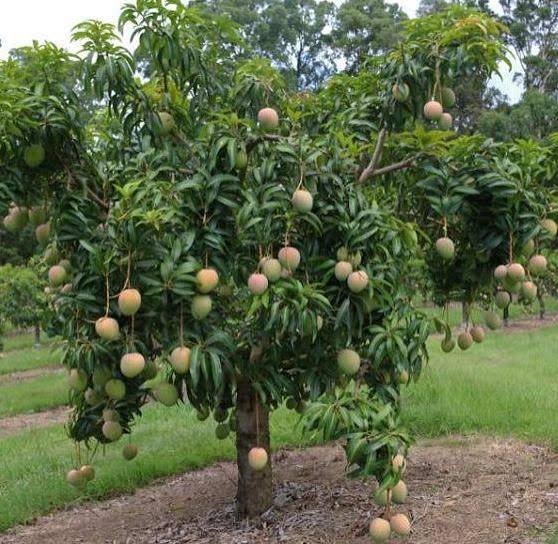
Planting and Spacing: Traditional vs. High-Density Layouts
One of the most critical decisions you will make during the land preparation phase is choosing your orchard layout. This decision directly impacts your initial capital cost, your management efficiency, and your long-term yield per acre.
Traditional Layout (10m x 10m)          High-Density Layout (5m x 5m)
+------------------------+             +------------------------+
|   O                O   |             |   O   O   O   O   O    |
|                        |             |   O   O   O   O   O    |
|                        |     VS.     |   O   O   O   O   O    |
|   O                O   |             |   O   O   O   O   O    |
+------------------------+             +------------------------+
(40 Trees / Acre - Slow Returns)       (160+ Trees / Acre - Fast Returns)
1. The Traditional Spacing Model
For generations, Indian farmers spaced their mango trees roughly 30 feet to 36 feet apart
- The Pros: The trees are allowed to grow into massive, majestic canopies over decades. Maintenance is low, and the orchard requires minimal structural pruning.
- The Cons: This model accommodates only about 40 trees per acre. Because the trees take years to grow large enough to fill that empty space, your yield per acre during the first 7 to 10 years is incredibly low, delaying your return on investment.
2. The High-Density Planting (HDP) Model
Modern commercial agriculture relies heavily on High-Density Planting. By reducing the spacing you can increase the tree count significantly.
- The Numbers: An HDP layout allows you to fit anywhere from 160 to over 250 trees per acre.
- Why it Wins on Profit: Instead of waiting 10 years for 40 massive trees to produce, you utilize the space efficiently with smaller, compact trees right from year one. The total yield per acre spikes dramatically in the early years, allowing you to maximize your returns much faster.
- The Catch: HDP requires strict, mandatory annual pruning right after harvest to keep the tree canopies small, neat, and accessible, ensuring that sunlight can reach every branch.
Pest and Disease Management: Protecting Your Investment
A mango orchard is a valuable asset, but it is highly susceptible to specific pests and diseases that can destroy your entire crop during the critical flowering and fruit-setting windows. To protect your yields, you must actively manage these two primary threats.
1. Taming the Mango Hopper (Idioscopus nitidulus)
The mango hopper is the most destructive pest in commercial cultivation. These tiny, sap-sucking insects multiply rapidly during the spring flowering season (January to March).
- The Damage: Thousands of hoppers puncture the tender flower clusters (panicles) and young fruits to suck out the plant sap. This causes the flowers to turn brown, dry up, and drop off entirely. They also excrete a sticky substance called “honeydew” on the leaves, which attracts a black fungus known as sooty mold, blocking photosynthesis.
- The Defense: Keep your orchard clean and prune inner branches to allow sunlight and air to pass through the canopy, as hoppers love dark, humid environments. During the pre-flowering stage, apply targeted organic neem-based sprays or recommended bio-pesticides to keep their population under check.
2. Combating Powdery Mildew (Oidium mangiferae)
This fungal disease strikes during cool, humid winter mornings when the trees are in full bloom.
- The Damage: It appears as an ash-white, powdery coating covering the flower clusters, tender leaves, and newly formed small green fruits. If left untreated, the affected flowers dry up and fall off, resulting in total crop failure.
- The Defense: Spray wettable sulfur or systemic eco-friendly fungicides right at the emergence of the flower panicles, and repeat the application 15 days later if high humidity persists.
Harvest and Export Standards: Meeting the Global Benchmarks
Harvesting an Alphonso mango is a precise art. If you pick the fruit too early, it will never develop its characteristic sweetness and aroma, turning sour and wrinkled instead. If you pick it too late, the fruit will develop an internal physiological disorder known as spongy tissue, where the flesh near the seed turns soft, sour, and unpalatable, making it unfit for sale.
1. Key Maturity Indicators
Commercial growers use distinct physical signs to determine the exact day of harvest:
- The Shoulder Test: The “shoulders” of the fruit near the stem rise up, creating a slight dip where the stalk attaches.
- Skin Color Shift: The skin transitions from a flat, matte dark green to a slightly lighter green with a faint yellowish-waxy sheen.
- The Tap Test: Plunging a sample fruit into a container of water; fully mature mangoes are dense and sink to the bottom, while immature ones float on the surface.
2. Precise Harvesting Mechanics
Never shake the tree to let the fruits drop to the ground. A single bruise on the skin of an Alphonso instantly ruins its market value. Workers must use specialized manual harvesting poles equipped with a sharp blade and a soft collection net (net-gatherers). Cut the fruit leaving a 2 to 3 cm stem attached. This stem length prevents the highly acidic, sticky raw sap from leaking out and burning the skin of the fruit, which creates black streaks that lower its market grading.
3. Post-Harvest Washing and Grading
For international export markets (such as Europe, the Middle East, and the USA), the harvested mangoes must undergo rigorous processing:
- Desapping: The fruits are placed upside down on specialized slotted conveyers or mats for 4 hours to let the clear sap drain away safely.
- Hot Water Treatment / Vapour Heat Treatment (VHT): A mandatory requirement for many export destinations to clear out any latent fruit fly larvae hidden deep inside the skin.
- Weight Grading: Fruits are sorted into standard boxes based on individual weight, typically ranging from 200 grams to 350 grams per fruit.
The Financial Math: Alphonso Mango Cultivation Profit per Acre
Let’s look at the financial performance of a mature, commercial Alphonso orchard. Mango is a long-term investment: your initial years involve capital expenses for land preparation, fencing, high-density sapling purchases, and installing drip irrigation systems. However, once the orchard hits maturity, it turns into a highly profitable revenue generator.
Here is a realistic financial projection for a mature High-Density Planting (HDP) orchard (Year 7 onwards) under standard management conditions:
1. Annual Operational Cost Estimation (Per Acre)
- Organic Manures, Fertilizers & Micronutrients: ₹25,000
- Pest Control, Fungal Management & Organic Sprays: ₹20,000
- Pruning, Irrigation Management & General Field Labor: ₹20,000
- Harvesting, Manual Snipping & Transport Crate Packing: ₹15,000
- Total Annual Maintenance Cost: ₹80,000
2. Annual Revenue Estimation (Per Acre)
- Average Yield per HDP Tree (Year 7+): ~40 kg to 50 kg of grade-A/B fruit.
- Total Acre Yield (160 Trees/Acre): $160 \times 45\,\text{kg} = 7,200\,\text{kg}$ (7.2 Tons).
- Average Commercial Farm-Gate Price: ₹70 to ₹100 per kg (Blended average across early-season premium prices and mid-season volume pricing).
- Gross Annual Revenue ($7,200\,\text{kg} \times ₹85/\text{kg}$): ₹6,12,000
3. The Net Profit Margin
$$\text{Net Profit} = \text{Gross Revenue} – \text{Operational Costs}$$
$$\text{Net Profit} = ₹6,12,000 – ₹80,000 = ₹5,32,000\,\text{per acre annually}$$
By shifting from traditional low-density methods to smart high-density layouts, optimizing drip irrigation, and protecting flowers from hoppers, your Alphonso mango cultivation profit per acre can comfortably range between ₹4,500,00 to ₹5,500,00 per year. If you tap into direct-to-consumer premium home deliveries in metros or secure direct export contracts, your profit margins can rise even higher.
Investing in an Alphonso orchard means building a sustainable, long-term asset that appreciates over time, providing steady returns for generations while delivering the finest mangoes to fruit lovers worldwide.
See Also
Mango farming ₹100 से ₹1000 per/kg | Mango Farming in india
The Kamalam Revolution: The Ultimate Guide to Dragon Fruit Farming in India