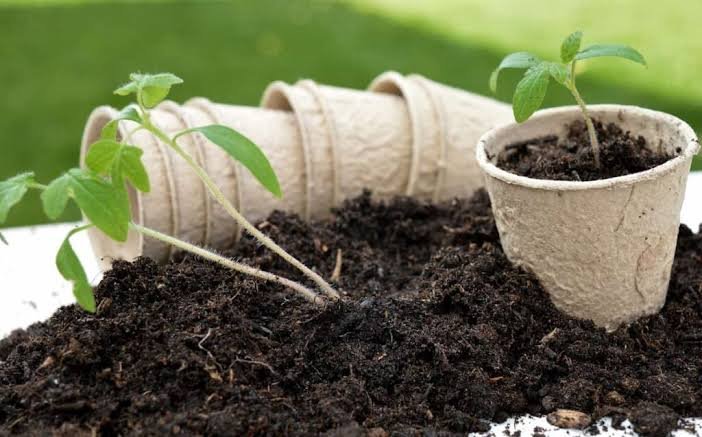

If you step out to your balcony, gently bump your potted Hari Mirch or heavy-laden tomato plant, and a tiny white cloud instantly bursts into the air, you are dealing with one of the most frustrating pests in Indian gardening. Those tiny white insects under chilli leaves are whiteflies (Bemisia tabaci or Trialeurodes vaporariorum).
Despite their miniature size, whiteflies are notorious sap-feeders. They drain your plant’s vitality, cover leaves in sticky honeydew, and transmit devastating plant viruses like the Chilli Leaf Curl Virus (ChiLCV). Whether growing on a sunny apartment balcony in Mumbai, a hot terrace garden in Bengaluru, or an open farm patch in Punjab, managing Whiteflies on Chilli and Tomato Plants and tomatoes requires a strategic, multi-step approach.
How to Control Whiteflies in Seven Steps
If your plants are currently under attack and you need a quick action plan, follow this proven step-by-step protocol immediately:
- Confirm whiteflies by inspecting leaf undersides. Turn over lower and middle leaves during early morning hours to look for tiny white moth-like adults and translucent nymphs.
- Isolate heavily affected container plants. Move severely infested pots or grow bags away from healthy garden plants to prevent adult flies from migrating.
- Remove severely infested leaves. Prune bottom foliage that is yellowed, curled, or heavily coated in eggs and immobile nymphs, and discard them in a tied dustbin bag.
- Install yellow sticky cards. Hang yellow sticky traps 2–4 inches above the plant canopy to continuously capture flying adults.
- Wash small populations off with water. Use a sharp jet of hose water focused on the undersides of leaves early in the morning to knock off adult flies and clear honeydew.
- Apply an appropriate insecticidal soap or labelled neem formulation. Spray a solution of cold-pressed neem oil (10,000 PPM or with potassium soap emulsifier) or insecticidal soap, hitting the undersides of leaves thoroughly.
- Repeat inspection and treatment according to the product label. Reapply your organic spray every 4 to 5 days for at least three consecutive cycles to break the pest’s lifecycle.
How to Identify Whiteflies on Chilli and Tomato Plants
Detecting whiteflies early makes all the difference between a minor garden tweak and a full-blown infestation.
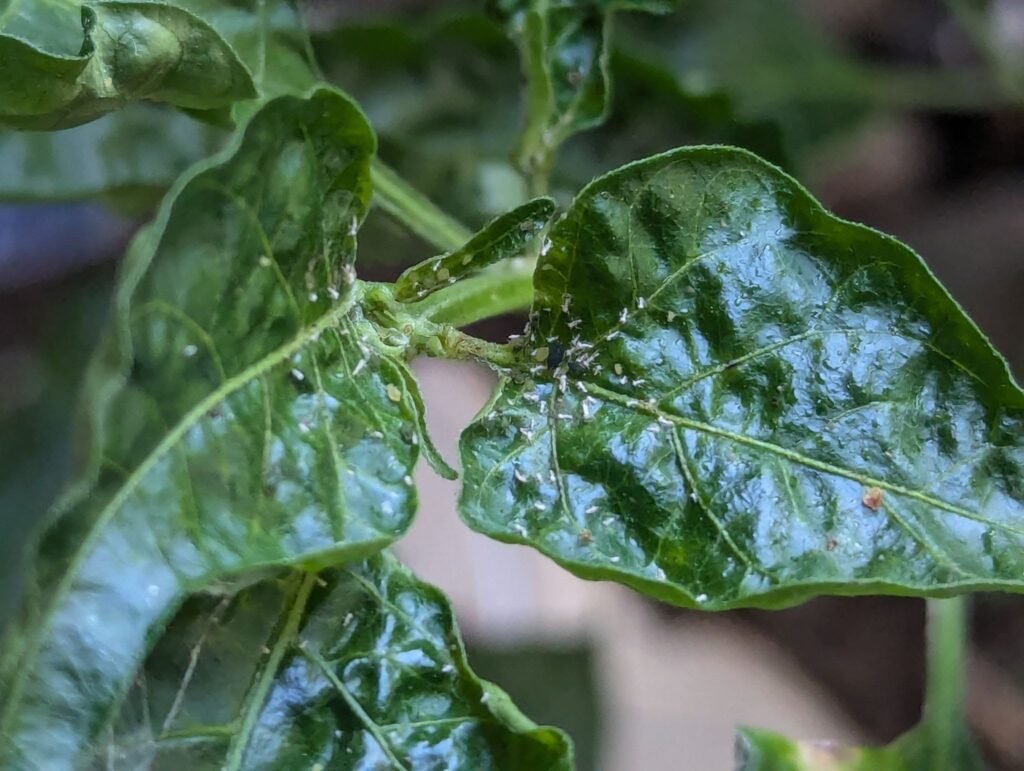
Whiteflies are soft-bodied, sap-sucking insects roughly 1 to 2 mm in length. While adults possess small, powdery-white wings, they are not true flies; they belong to the order Hemiptera, making them close cousins of aphids and mealybugs.
Classic Signs of Infestation
- Powdery White Clusters: Clusters of tiny white specks resting under the leaves.
- Sticky Residue (Honeydew): A glistening, sticky layer on top of leaves lower down the plant, excreted by whiteflies as they feed on sap.
- Sooty Mold Growth: A dark, black velvety fungus growing on top of the sticky honeydew.
- Leaf Yellowing & Curling: Leaves turning pale yellow, crinkling at the margins, or curling upwards due to nutrient depletion.
The “Shake Test” for Chilli and Tomato Plants
Because adult whiteflies scatter instantly when disturbed, Indian home gardeners can use a simple technique known as the shake test:
- Walk up to your chilli or tomato grow bag early in the morning when ambient temperatures are cooler and insects are less energetic.
- Gently tap or shake the main stem of the plant while watching the leaf canopy carefully.
- If dozens of tiny white, moth-like insects flutter up into a brief, cloud-like swirl before settling back down under adjacent leaves, you have confirmed an active whitefly infestation.
Unlike white powdery mildew (which is a fungal dust on the leaf surface) or mealybugs (which stay glued in cottony masses), whiteflies will take flight in response to physical vibration.
Understanding the Whitefly Lifecycle: Eggs, Nymphs, and Adults
To get effective whitefly control on tomato plants and chillies, you must understand who you are fighting. Sprays that target adult flies often leave eggs and nymphs completely untouched.
+-----------------------------------------------------------------+
|                    WHITEFLY LIFECYCLE STAGES                    |
+-----------------------------------------------------------------+
| 1. EGG      : Microscopic pale-yellow ovals attached via stalk   |
| 2. NYMPH    : Flat, scale-like crawler stage (immobile feeding) |
| 3. PUPAE    : Opaque oval shell with visible reddish eyes       |
| 4. ADULT    : Flying insect with powdery white wings (~1-2mm)   |
+-----------------------------------------------------------------+
- The Egg Stage: A single female whitefly lays between 200 and 400 microscopic eggs on the undersides of young top leaves. They appear as tiny yellowish-white dots inserted vertically into leaf tissue.
- The Nymph/Crawler Stage: Once hatched, the nymph crawls a short distance, anchors itself to a leaf vein, flattens into a scale-like oval shape, and loses its legs. It feeds continuously on plant phloem sap.
- The Pupal Stage: The nymph thickens into an opaque pupa with distinct red eyes, during which it is protected by a waxy coating that repels standard contact sprays.
- The Adult Stage: Emerging adults live for 20 to 30 days, mating constantly and spreading virus particles from plant to plant.
In warm Indian weather (28°C to 38°C), this entire cycle completes in as little as 14 to 21 days, leading to exponential population explosions during pre-monsoon and post-monsoon months.
Why a Single Spray Usually Fails
The single biggest mistake home gardeners make when choosing an organic whitefly treatment in India is spraying once and expecting the problem to disappear.
A single application of neem oil or soap spray kills only a percentage of active adults and young crawlers. It leaves behind:
- Unhatched eggs that are protected from contact sprays.
- Thick-shelled pupae resting safely under lower leaves.
- Adults that flew away during spraying and returned an hour later.
Within 4 days, those eggs hatch into a fresh batch of crawlers, and within a week, your plant looks just as infested as before. Continuous, multi-treatment cycles timed to disrupt the reproductive cycle are essential.
Immediate Action for a Light Infestation
If you catch white insects under chilli leaves in their early stages—with only 2 or 3 leaves showing mild whitefly presence—you don’t need harsh chemicals.
- Prune Low-Hanging Fruit (and Leaves): Cut off the bottom-most 2–3 leaves touching the soil, as these often serve as the primary landing strip for ground crawlers and adult whiteflies.
- Morning Hose-Down: Use a high-pressure spray nozzle on your garden hose. Direct the stream upwards to blast leaf undersides. Do this early in the morning so leaves dry fully under the morning sun, preventing fungal diseases.
- Wipe Down Leaves: Take a cotton swab dipped in mild soapy water (1 tsp dish soap per liter of water) and physically wipe away egg clusters on smaller container plants.
The 7-Day Control Schedule for Heavy Infestations
When dealing with a persistent infestation across your terrace garden, follow this structured weekly schedule:
| Day | Action Required | Target Stage |
| Day 1 | Blast undersides of leaves with water; install Yellow Sticky Traps 3 inches above plants. Apply Neem Oil + Soap spray. | Adults & Crawlers |
| Day 3 | Inspect yellow sticky cards; physically prune heavily infested, yellowing bottom foliage. | Trapped Adults |
| Day 5 | Apply Second Spray: Liquid Potassium Insecticidal Soap or 10,000 PPM Neem Oil solution. | Newly Hatched Crawlers |
| Day 7 | Wipe down remaining honeydew and sooty mold with soft cloth; re-position sticky traps as plant grows. | Residual Pests |
Yellow Sticky Traps: Placement and Limitations
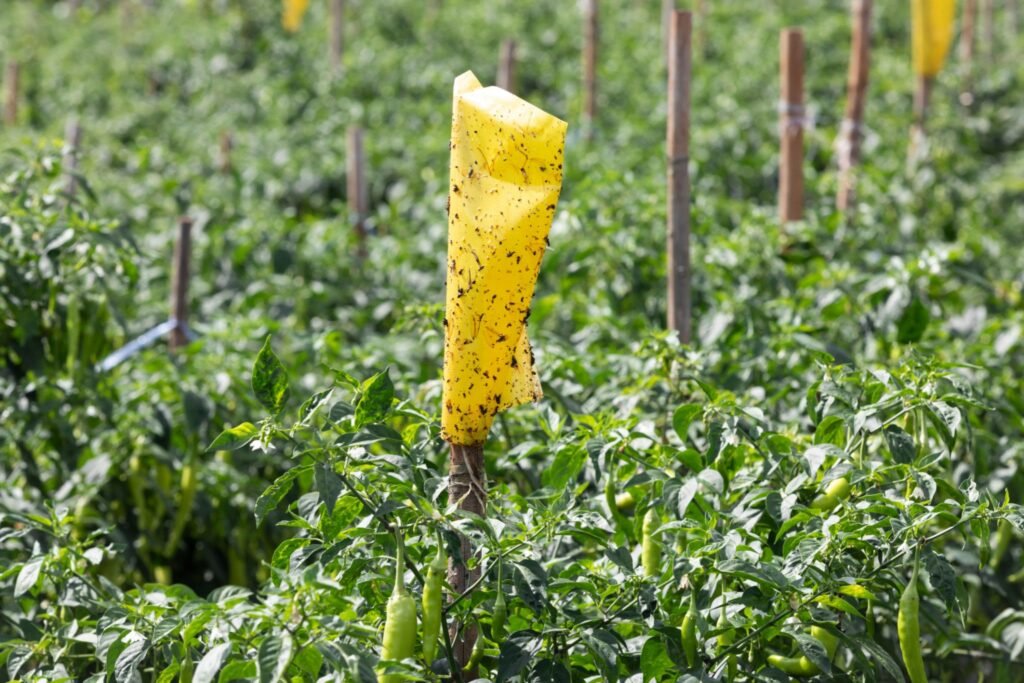
Yellow sticky cards are among the most effective non-toxic monitoring tools for whiteflies on chilli plants. Whiteflies are attracted to the specific yellow wavelength (around 550nm) and get permanently stuck upon landing.
Correct Placement Rules
- Position Height: Hang traps right at the top canopy level—about 2 to 4 inches above the growing tip of your chilli or tomato plants. Adult whiteflies naturally congregate around new growth.
- Density: Use 1 trap for every 2 to 3 grow bags on a balcony, or 1 trap every 5 feet in an open bed.
- Maintenance: Replace cards once 70% of the sticky surface is covered with insects or dust.
Key Limitation
Yellow sticky traps only catch adult whiteflies. They do not catch eggs, scale-like nymphs, or pupae. Therefore, yellow traps should be viewed as a control and monitoring tool, not a standalone cure.
Neem Oil and Insecticidal Soap: Safe-Use Principles
Using neem oil for whiteflies is a cornerstone of organic gardening in India, but applying it incorrectly can burn plant foliage under hot afternoon sun.
How Neem Oil Works
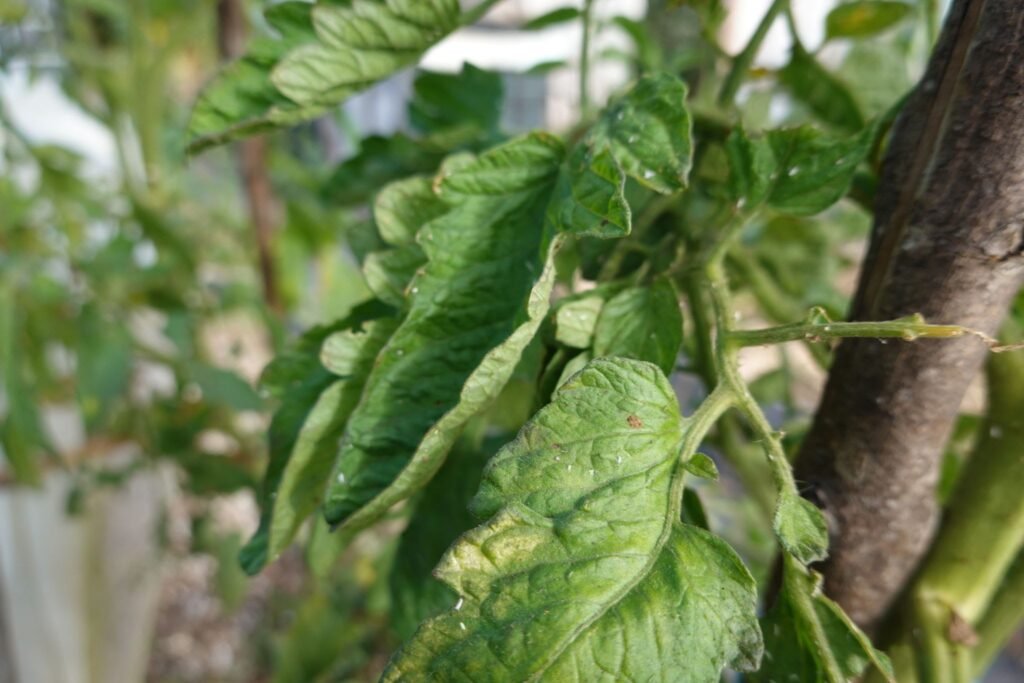
Neem contains active azadirachtin, which acts as an antifeedant, hormone disruptor, and smothering agent for soft-bodied pests.
Perfect Organic Recipe (Per 1 Liter Water)
- Cold-Pressed Pure Neem Oil (or 10,000 PPM Neem): 5 mL (approx. 1 teaspoon)
- Liquid Dish Soap or Organic Soap Emulsifier: 2 to 3 mL (half a teaspoon)
- Lukewarm Water: 1 Liter
Mixing Tip: Neem oil and water do not mix directly. Always mix the neem oil with the soap in a small cup first until it forms a creamy milky liquid, then shake it thoroughly into your 1-liter water bottle.
Critical Spraying Guidelines
- Spray at Sunset: Never spray neem oil during midday peak sunlight (11 AM – 4 PM). Direct sunlight on oil-coated leaves causes severe sunburn (phytotoxicity).
- Cover the Undersides: Whiteflies reside almost exclusively under leaves. Point your spray nozzle upwards to coat the leaf undersides completely until dripping.
- Check Soap Quality: Avoid concentrated synthetic detergent powders; use mild liquid hand soap, baby shampoo, or specialized potassium insecticidal soap.
Beneficial Insects and Biological Control
Nature provides effective predators that keep whitefly populations in check naturally. If you garden outdoors or on open terraces, encouraging these beneficial insects can provide long-term protection:
- Ladybird Beetles (Ladybugs): Both adult ladybugs and their larvae consume large quantities of whitefly nymphs daily.
- Green Lacewing Larvae (Chrysoperla carnea): Often called “aphid lions,” lacewing larvae are voracious predators of whitefly eggs and nymphs.
- Parasitic Wasps (Encarsia formosa): Microscopic, stingless wasps that lay eggs inside whitefly nymphs, turning them dark brown or black as the wasp larva develops inside.
Avoid broad-spectrum chemical insecticides (like synthetic pyrethroids), as they kill these beneficial predators far faster than they kill whiteflies, resulting in severe pest resurgences later.
Managing Ants, Weeds, and Nearby Host Plants
Whitefly control goes beyond just treating the infected chilli or tomato plant; you must manage the surrounding garden ecosystem.
The Ant Connection
Black and red ants frequently farm whiteflies for their sweet honeydew. Ants actively protect whitefly colonies from natural predators like ladybugs.
- Solution: Apply a ring of natural diatomaceous earth or chalk around the base of your pots, or wrap stem bases with horticultural sticky tape to prevent ants from climbing your plants.
Weeds and Alternate Hosts
Whiteflies overwinter and breed on common Indian garden weeds like Parthenium (gajhar ghas), Lantana, and wild amaranth.
- Keep surrounding pot soil and garden beds clear of wild weeds.
- Avoid planting alternate whitefly hosts like brinjal (eggplant), okra (bhindi), and papaya in immediate contact with your chilli and tomato plants if whitefly pressure is high.
Preventing Whitefly-Transmitted Plant Diseases
The main danger of whiteflies on chillies and tomatoes isn’t just leaf damage—it is virus transmission. Whiteflies act as vectors for viral pathogens that can destroy your entire harvest within weeks.
Major Viral Diseases Carried by Whiteflies
- Chilli Leaf Curl Virus (ChiLCV): Causes severe downward and upward curling of leaf margins, stunted plant growth, thickened leaf veins, and complete drop of flowers and chillies.
- Tomato Leaf Curl Virus (ToLCV): Leaves become small, pale yellow, and severely twisted upwards (cup-shaped), stopping fruit development.
Crucial Warning: Plant viruses cannot be cured once infected. Pesticides and neem oil kill the whitefly insect vector, but they cannot cure a virus-infected plant.
Prevention Protocol
- Plant virus-resistant or tolerant varieties (such as F1 hybrid chilli and tomato seeds certified for disease resistance).
- Remove and safely destroy (burn or bin) any plant showing extreme puckering, stunted leaves, and zero flower set to prevent whiteflies from spreading the virus to nearby healthy plants.
When Home Remedies Are Insufficient
If you have tried neem oil, sticky traps, and water sprays for 3 weeks and your terrace chilli plants are still swarming with whiteflies, it may be time to evaluate stronger interventions—especially in commercial or large field garden setups.
For serious outbreaks threatening yield, bio-pesticides containing entomopathogenic fungi are effective organic alternatives:
- Verticillium lecanii (now Lecanicillium lecanii): A natural fungal biopesticide that infects and consumes whiteflies from the inside out in humid conditions.
- Beauveria bassiana: Another effective fungal strain for controlling sap-sucking insects organically.
Apply these bio-formulations during warm, humid evening hours according to manufacturer guidelines.
Frequently Asked Questions (FAQ)
How do I get rid of white insects under chilli leaves fast?
The fastest immediate remedy is to physically blast the leaf undersides with a strong jet of water to knock off adult flies, hang yellow sticky traps at canopy level, and follow up immediately with a thoroughly emulsified neem oil spray (5ml neem oil + 2ml soap per liter of water) applied at sunset.
Does neem oil really work for whiteflies on tomato plants?
Yes, neem oil is highly effective for whitefly control on tomato plants, provided it is applied correctly. It acts as an antifeedant and smothers soft-bodied nymphs. However, because neem oil does not kill unhatched eggs, it must be sprayed every 4 to 5 days over a 2-week period to break the pest lifecycle.
Why are my chilli leaves curling up even after whiteflies are gone?
If your chilli leaves are severely crinkled, stunted, and curled upward into boat shapes, the plant may have already contracted Chilli Leaf Curl Virus (ChiLCV) transmitted by whiteflies prior to treatment. While newly emerging shoots might improve if viral load is low, infected leaves will not uncurl.
Can buttermilk or milk spray control whiteflies organically in India?
Sour buttermilk (khatti chhaach) diluted with water (1:5 ratio) is a popular traditional Indian remedy. It creates a thin film on leaves that deters soft insects and prevents fungal growth, but it is less reliable than standardized neem oil or insecticidal soap for heavy infestations.
See Also
Infestation of Whiteflies on Tomato Plants
Whitefly Treatment for Plants – How to Control Whiteflies
Tomato Leaf Curl in India: How to Identify the Cause and Save Your Plants
Yellow Leaves on Curry Leaf Plant? 9 Causes and How to Fix Them
How to Grow Curry Leaf Plant from Cuttings in India: The Right Way to Root Kadi Patta